
Downtown West Public Art Vision & Implementation Framework
A roadmap for public art as a form of social infrastructure—a way to accelerate belonging, spark public life, honor history, and strengthen local cultural ecosystems.
Role: Co-contributor and project manager with Gehl Studio.
Client: Google
“Art projects in Downtown West should bring meaning to urban spaces, inspire thought and dialogue, commemorate important people and events, and tackle the issues of the day.
Artworks should be rooted in San José’s unique character — its connection to the natural environment, its importance as a home to innovation, and its rich history and culture.”
Large-scale developments often struggle to feel authentic and rooted in place. For Google’s Downtown West in San José, the challenge was to create a cultural identity from the ground up—one that balanced global visibility with deep ties to the city’s history, ecology, and diverse communities. Without intention, public art in projects of this scale can risk becoming superficial or disconnected from its local context.
The team approached this by combining research and engagement. We reviewed design guidelines, historic resources, pedestrian flows, and social infrastructure plans, while also facilitating stakeholder workshops and mapping the local arts ecosystem. These efforts surfaced a clear priority: amplify local voices while thoughtfully inviting global perspectives.
The result was a tiered public art system—Signature Pieces, Gateways, Serendipities, Events, and Construction Artwork—designed to balance scale, cost, and rhythm of experience.
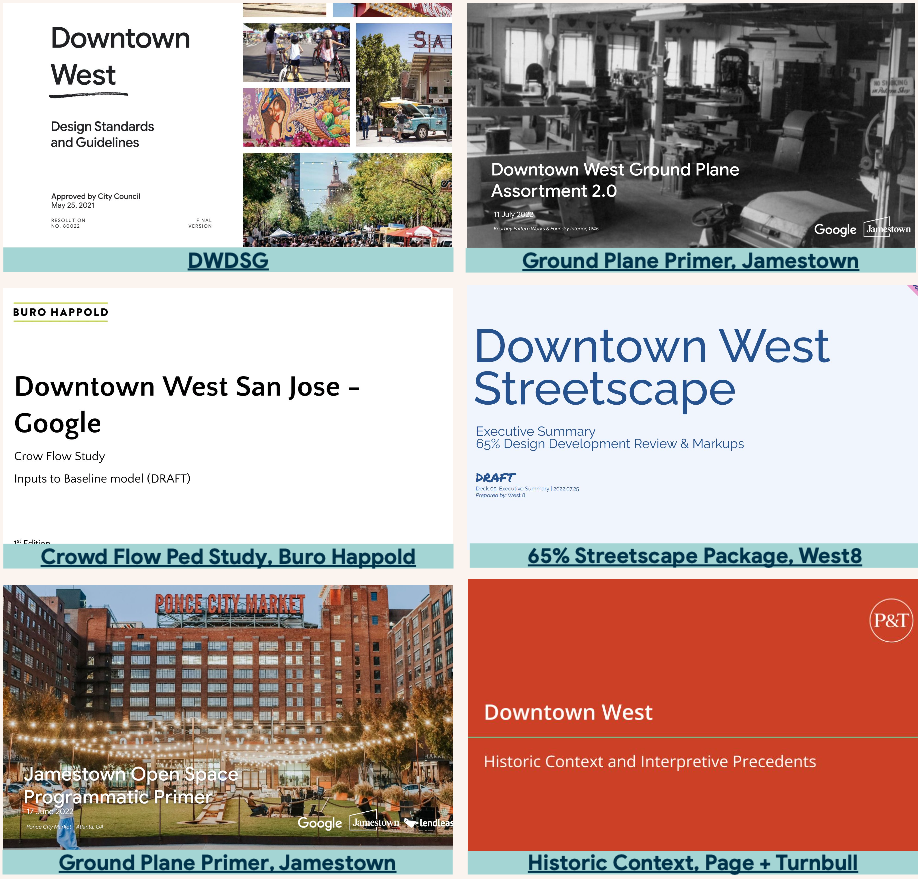
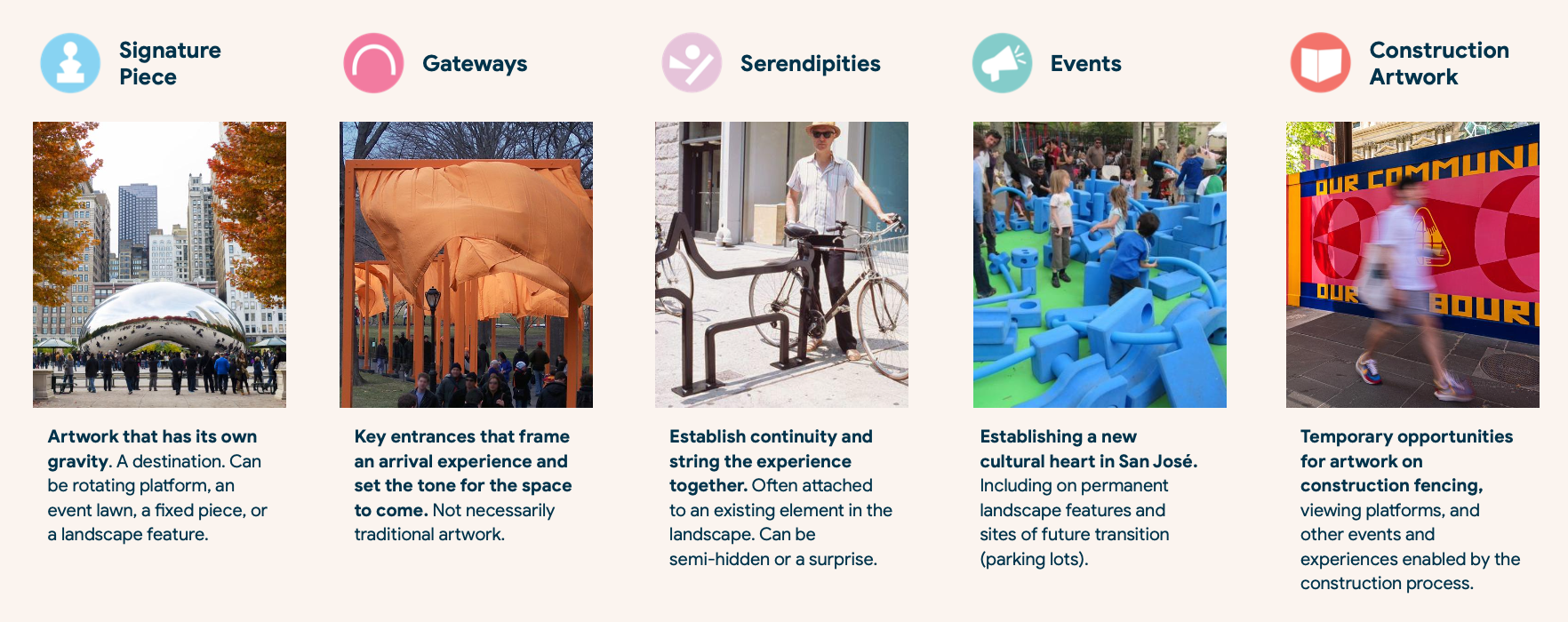
To identify key sites, we synthesized district programming, pedestrian analysis, historic resources, open space design intent, and social infrastructure strategies. The finalized plan anchored public art in two major parks, The Meanders and Creekside Walk, while also activating construction phases with temporary art.


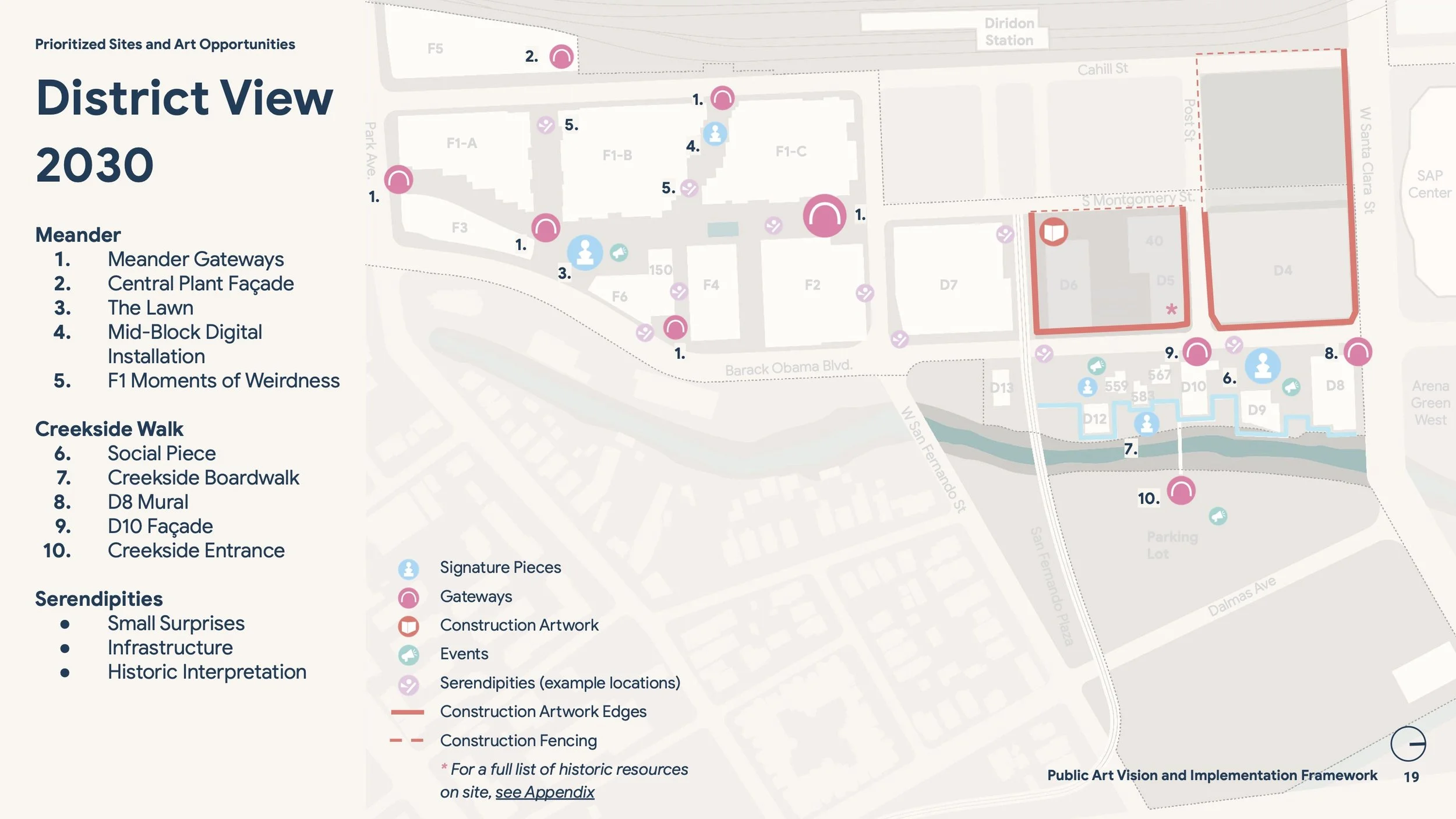

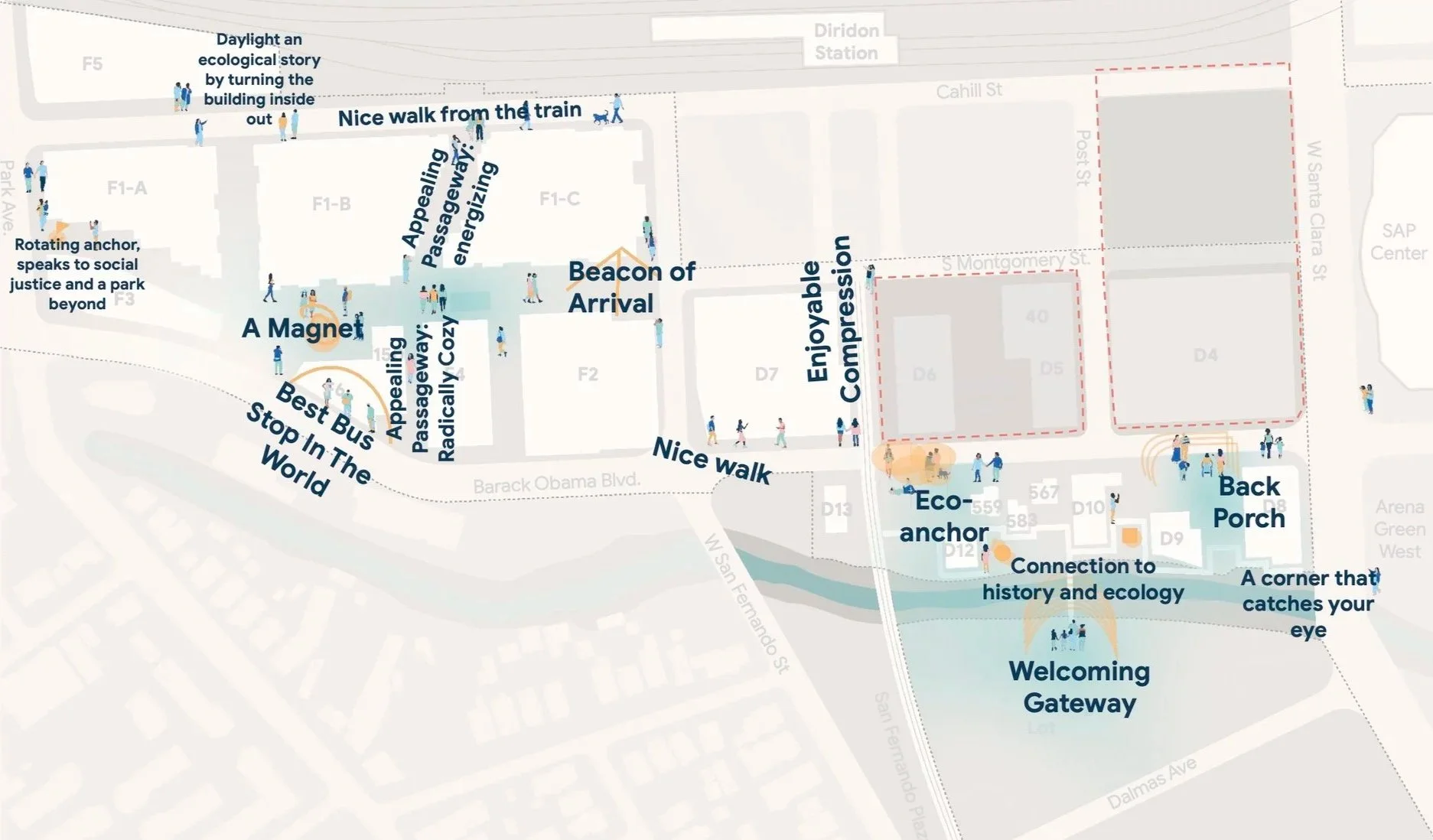
Each public art tier was tailored by location, impact, purpose, and cost - creating different implementation plans that gave Google a gallery of fiscal options to maintain public art throughout the years to come; Including a proposal for early activation during construction phases.

Inclusion and capacity-building were central. Guided by local arts advisors Art Builds Community (ABC) and Art Is Luv (AIL), we developed mechanisms to ensure participation:
Local Artist Pool – expanding opportunities through small-scale commissions like murals, rotating installations, and serendipitous works.
Mentorship Program – pairing emerging local artists with established practitioners to build skills and strengthen community connections.
Together, these strategies equipped Google with a long-term framework for integrating public art that is authentic, inclusive, and deeply rooted in San José’s cultural fabric.
“One of the most effective ways to promote artist inclusion is to provide a greater volume of small opportunities, for example through construction murals, serendipities, and rotating works”


The deliverable can be shared in person for a deeper look at the different framework and budget plans we created.